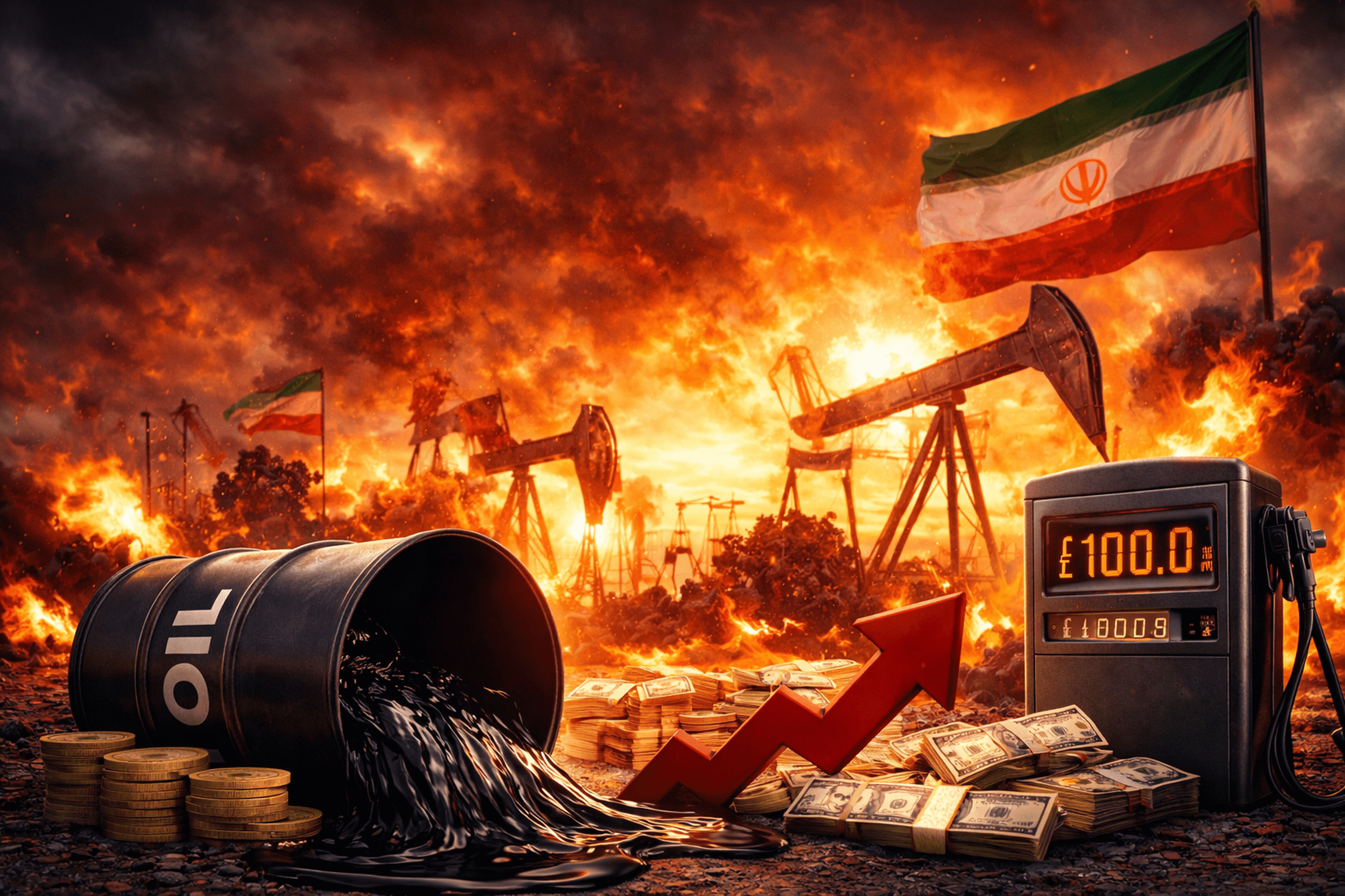
The escalating conflict involving Iran has sparked major concerns across global financial and energy markets. Whenever tensions rise in the Middle East, oil prices often react quickly because the region produces a large share of the world’s energy supply. The current crisis is no exception. Analysts and economists are closely monitoring the situation to determine how high oil prices could climb and what the broader economic consequences might be.
Oil is a critical resource that powers transportation, manufacturing, agriculture, and global trade. Because of this, any disruption in supply can quickly affect economies worldwide. As the Iran conflict continues to develop, experts warn that higher oil prices could lead to rising inflation, slower economic growth, and increased financial uncertainty.
This article explains how the Iran war could push oil prices higher and explores the potential economic impact across global markets.
Why the Iran Conflict Is Affecting Oil Prices
The Middle East is one of the most important oil-producing regions in the world, and Iran plays a significant role in regional geopolitics. One major concern is the potential disruption of energy shipments passing through the Strait of Hormuz, a narrow waterway that connects the Persian Gulf to international waters.
Roughly one-fifth of the world’s oil supply travels through this route every day, making it one of the most critical energy chokepoints on the planet. If the conflict interferes with shipping in this area, the global oil market could face serious supply shortages.
Energy traders respond quickly to such risks. Even the possibility of disruption can cause oil prices to surge because markets begin pricing in future supply constraints.
How High Could Oil Prices Go?
Since the conflict escalated, global oil prices have already climbed sharply. Some analysts say prices could continue rising if tensions persist or worsen.
In moderate scenarios, oil prices could remain above $100 per barrel for an extended period. However, in more severe cases involving major supply disruptions, some experts believe prices could reach $130 or even $150 per barrel.
Such levels would represent one of the biggest oil price shocks in recent years. The last time prices reached similar highs was during major global economic disruptions and supply crises.
Oil markets are highly sensitive to geopolitical tensions, and the uncertainty surrounding the Iran conflict is likely to keep prices volatile for the foreseeable future.
Higher Fuel Costs for Consumers
One of the most immediate consequences of rising oil prices is higher fuel costs for consumers. Petrol and diesel prices typically follow global crude oil trends.
If oil prices continue climbing, drivers may soon face higher costs at petrol stations. Transport companies, airlines, and shipping firms will also experience increased fuel expenses.
These costs rarely stay confined to the energy sector. Businesses often pass higher transportation costs on to consumers in the form of increased prices for goods and services.
This means households could begin to notice the effects in everyday spending, from commuting costs to delivery charges.
Inflation Could Rise Worldwide
Another major economic concern linked to higher oil prices is inflation. Inflation occurs when the general price level of goods and services increases over time.
Energy is a key input for many industries. Higher fuel prices increase production and transportation costs, which can push prices higher across the economy.
Food prices, for example, are particularly sensitive to energy costs. Farmers rely on fuel for machinery, irrigation, and transportation. Fertilizer production also depends heavily on energy resources.
As a result, rising oil prices can indirectly raise grocery prices and increase the overall cost of living.
Economists warn that if oil prices remain elevated for a prolonged period, inflation rates in many countries could rise again after recent attempts to bring them down.
Impact on Central Banks and Interest Rates
Higher inflation could complicate decisions for central banks around the world. Many policymakers had recently started considering interest rate cuts after inflation began to stabilize.
However, a sharp increase in oil prices could force central banks to reconsider these plans. If inflation rises again due to energy costs, interest rates may remain higher for longer.
Higher interest rates affect households in several ways. Mortgage payments may increase, borrowing costs can rise, and consumer spending may slow as people adjust their budgets.
For businesses, higher borrowing costs can also discourage investment and expansion.
Financial Market Volatility
The Iran conflict has already caused noticeable volatility in global financial markets. Stock markets tend to react quickly to geopolitical uncertainty because investors dislike unpredictable risks.
When tensions escalate, investors often move their money into safer assets such as gold, government bonds, or stable currencies. Meanwhile, shares in sectors heavily dependent on fuel—like airlines, transportation, and logistics—can experience declines.
Energy companies, on the other hand, sometimes benefit from rising oil prices because higher prices can increase their revenues.
Overall, however, prolonged geopolitical crises usually create uncertainty that affects investment decisions and market stability.
Possible Slowdown in Global Economic Growth
If oil prices remain high for an extended period, global economic growth could slow. Higher energy costs increase expenses for both businesses and consumers.
Companies may reduce production or delay investments due to higher operating costs. At the same time, households facing higher bills may cut back on spending.
This combination can weaken economic activity and reduce growth rates. Countries that import large amounts of energy may be particularly vulnerable because higher oil prices directly increase their national import costs.
Emerging economies often feel the impact most strongly, as rising fuel prices can place additional pressure on government budgets and household incomes.
Government Responses to the Energy Crisis
Governments may take steps to reduce the economic impact of rising oil prices. One possible measure is releasing oil from strategic reserves to stabilize global supply.
Many developed countries maintain emergency oil stockpiles specifically for situations involving supply disruptions or geopolitical crises.
Other possible government responses include fuel subsidies, tax reductions on energy, or temporary price controls. These measures aim to protect consumers and businesses from sudden price spikes.
However, such policies can be expensive for governments and may only provide temporary relief.
Long-Term Effects on Global Energy Policy
The Iran conflict may also influence long-term global energy strategies. Rising oil prices often encourage governments and companies to accelerate the transition toward renewable energy sources.
High fossil fuel prices can make alternatives like solar, wind, and electric vehicles more attractive. Many countries have already been investing heavily in clean energy to reduce dependence on oil and gas imports.
If geopolitical tensions continue to disrupt energy markets, the push toward energy diversification and sustainability may gain even more momentum.
Conclusion
The Iran war has triggered significant uncertainty in global energy markets, pushing oil prices higher and raising concerns about inflation and economic stability. While the exact outcome depends on how the conflict evolves, the possibility of supply disruptions in the Middle East has already shaken markets.
If oil prices continue to rise, the effects could be felt across the global economy—from higher fuel costs and rising inflation to slower economic growth and financial market volatility.
For households and businesses alike, the situation highlights how geopolitical conflicts in key energy regions can quickly influence everyday economic conditions around the world

 Business