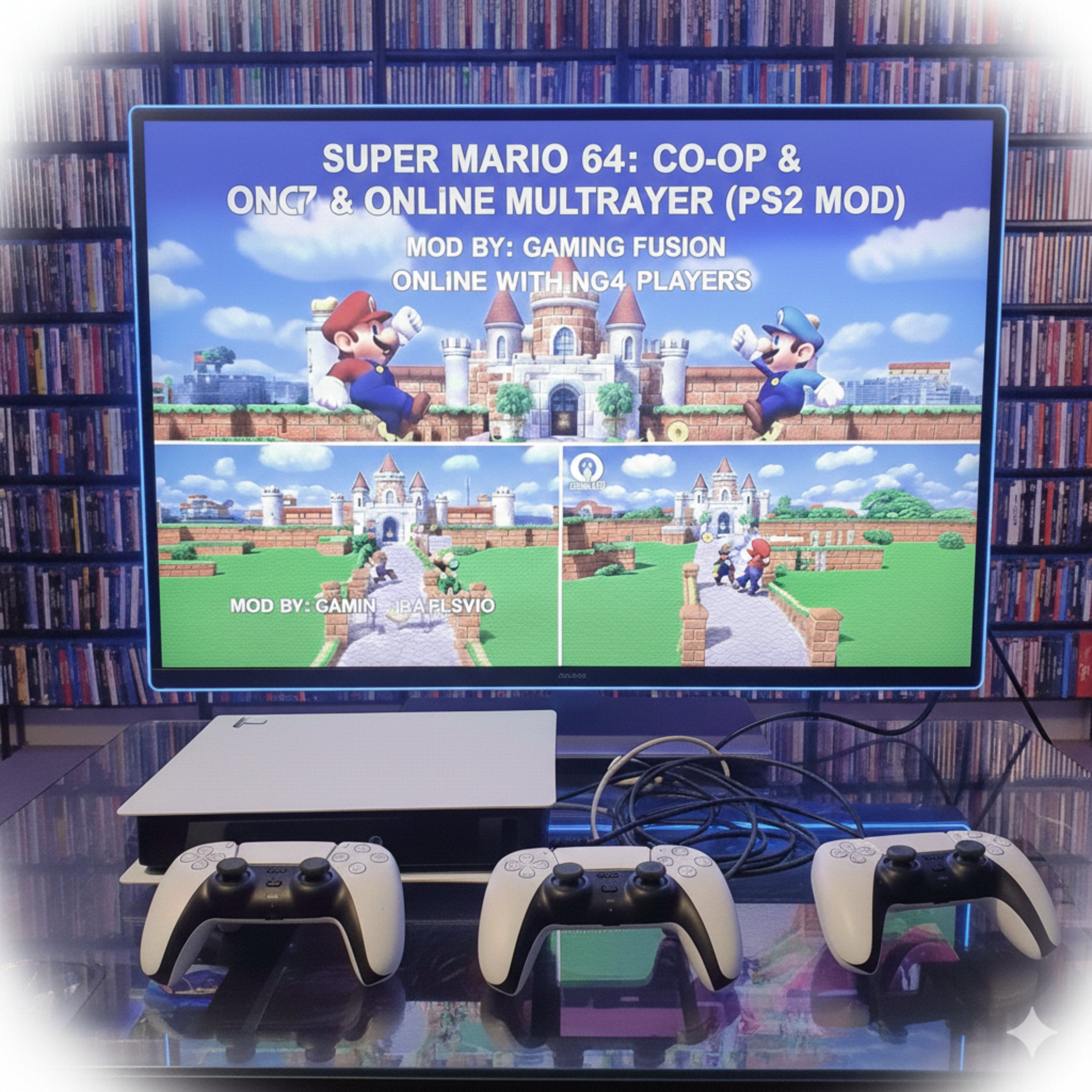
Super Mario 64 has been a cornerstone of video game history since its 1996 debut. Once strictly a single‑player Nintendo 64 experience, the game has been endlessly celebrated and tinkered with by fans for nearly three decades. But one recent modder project has taken things to a level most people never expected — running Super Mario 64 on a PlayStation 2 console, complete with co‑op and online multiplayer that connects with the original N64 version.
This astonishing achievement not only brings a beloved classic to unexpected hardware but also transforms how it can be played in ways Nintendo never intended. Here’s how this modder made the impossible happen — and why it’s such a fascinating milestone in retro gaming.
How Super Mario 64 Ended Up on PS2
At first glance, Super Mario 64 on a PlayStation 2 sounds outlandish. After all, the title was designed for Nintendo’s own hardware and never officially appeared on Sony platforms. However, the project started with an existing fan‑made port of the game to PS2 — a byproduct of the widespread Super Mario 64 decompilation efforts that allowed the classic to be rebuilt and modified on other systems.
Once the game was running on PS2, the real challenge began: adding support for cooperative play and synchronizing it with the Nintendo 64 version over a network. Rather than using conventional PS2 networking hardware, the creator adopted an unexpected trick — leveraging the built‑in PS1 hardware inside the PS2 to handle the mod’s networking duties.
This creative solution uses the PS1’s processing capabilities as a communication bridge, paired with a small Raspberry Pi‑based device (Pico 2) to send and receive network instructions. The result is fully functional online multiplayer between two consoles that weren’t designed to talk to each other — let alone host cooperative gameplay between them.
The Technical Feat Behind the Scenes
Making Super Mario 64 run on a PS2 is impressive on its own. But linking it to an N64 and enabling co‑op play pushes this project into modding legend.
Here’s how the setup works:
-
PS2 Port: Super Mario 64 is running on PS2 using a fan‑built port influenced by community decompilation efforts.
-
PS1 Chip Networking: Instead of a traditional network adapter, the modder uses the PS1 compatibility core inside the PS2 to process online networking data.
-
Raspberry Pi Interface: A small Pico 2 device connected by USB manages the network interface, bridging the console and internet connection.
-
N64 Integration: A customized N64 cartridge also equipped with a Pico device sends and receives position and game data between both systems.
-
Synchronized Gameplay: The mod adds a second Mario instance to each console’s version of the game and streams movement and state updates over the network.
By overcoming differences in hardware performance — like discrepancies in frame rates between the PS2 and N64 — the modder created a surprisingly stable cross‑platform experience. What could have been a chaotic mess instead works “much better than I thought it was going to.”
Co‑Op in Super Mario 64 — A Longtime Fan Dream
The original Super Mario 64 was a single‑player title. Nintendo never offered co‑op or online play in the classic version, though some later ports and spin‑offs (like Super Mario 64 DS) included limited multiplayer features.
That hasn’t stopped modders from experimenting. Over the years, the Super Mario 64 community has developed various co‑op and multiplayer mods — from split‑screen options to online multiplayer that supports many players. Projects like Net64 even offer online co‑op for PC emulators, letting players team up to collect stars together.
Still, none have matched the novelty of actually running the game on two different consoles and having them communicate in real time. That’s what makes this PS2 + N64 mod so remarkable.
Why This Matters for Gaming Culture
To most players, this project exists purely as a technical curiosity — an indulgent exploration of retro hardware limitations and fan dedication. But for modding communities and retro enthusiasts, it’s a vivid reminder of how far fan projects can go when creativity meets deep technical skill.
This mod underscores several important trends in gaming culture:
-
The Power of Open Source and Decompilation: Tools that allow old games to be rebuilt have enabled incredible fan creations, from improved ports to entirely new ways to play classic titles.
-
Modding as Preservation: Beyond nostalgia, modders often help preserve games and keep them relevant by fixing bugs, adding features, or expanding accessibility.
-
Cross‑Platform Innovation: What started as a Nintendo exclusive now bridges hardware ecosystems, challenging ideas about what’s possible with old games.
-
Community Collaboration: Much of this work builds on contributions from many creators in the Super Mario 64 modding scene, illustrating how shared passion drives innovation.
The Future of Retro Game Mods
As remarkable as this achievement is, it’s also part of a larger wave of ambitious retro game mods. Across communities, fans are adding co‑op to classics, enabling online play, and porting games to unexpected platforms. Just recently, Super Mario 64 has even been showcased running on the original PlayStation (PS1) as another modding milestone.
Projects like these blur the line between preservation and innovation, showing that even titles from the mid‑1990s can be reinvented with fresh life decades later.
Final Thoughts
This PS2 + N64 Super Mario 64 mod is more than a curious hack — it’s a testament to the enduring creativity and technical prowess of the gaming community. By combining hardware across generations and adding functionality that never existed in the original game, the modder pushed retro gaming into entirely new territory.
Whether you’re a Super Mario fan, retro gaming enthusiast, or just someone fascinated by what passionate communities can accomplish, this project delivers an unforgettable lesson: with enough ingenuity and determination, even the most beloved classics can be given bold new life.

 Games
Games