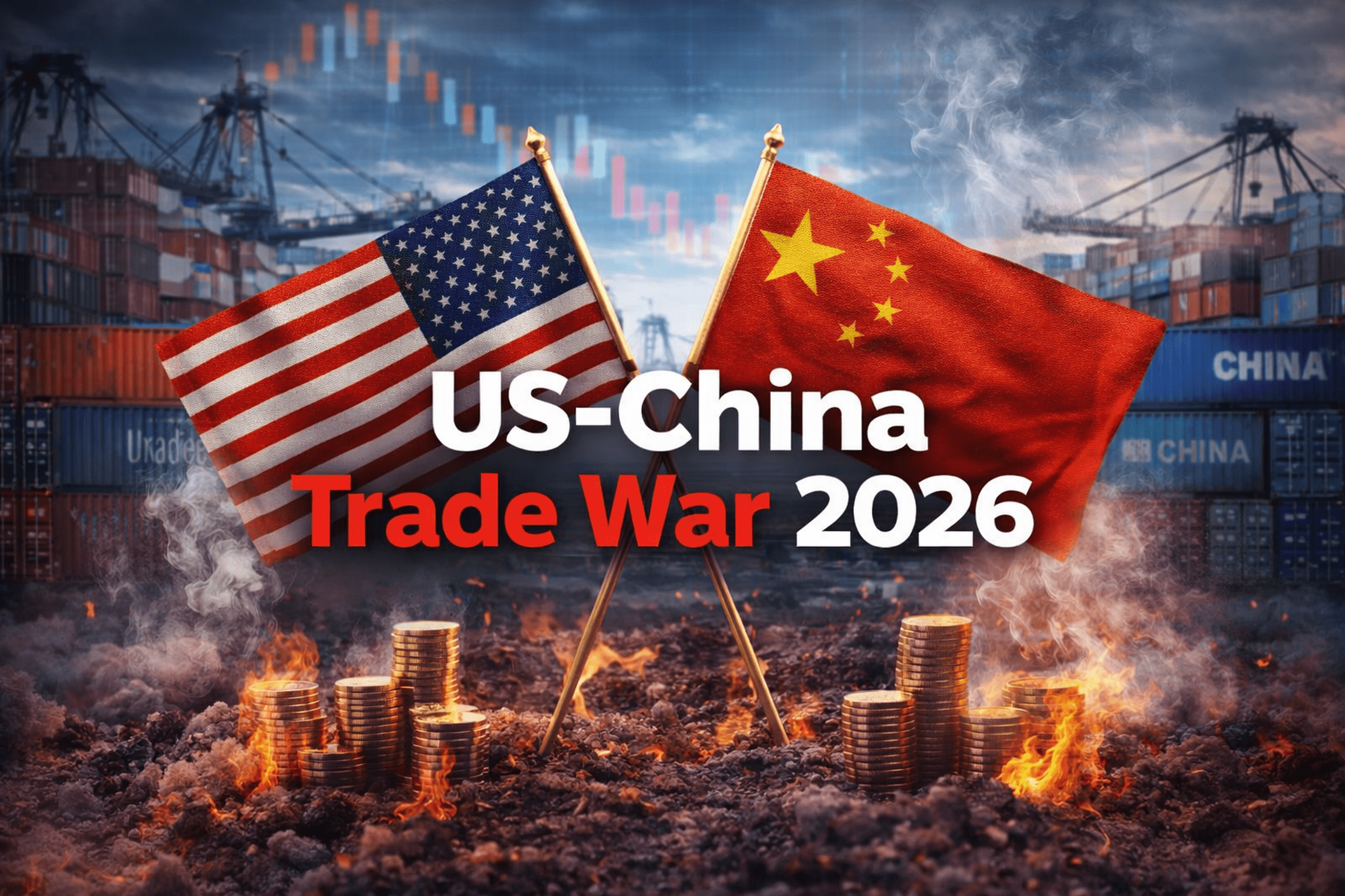
The US-China trade war has once again intensified in 2026, with both nations introducing new tariffs on key goods. What began years ago as a dispute over trade imbalances and intellectual property rights has evolved into a broader economic rivalry. The latest round of tariff measures is raising concerns among businesses, investors, and global markets.
As the world’s two largest economies continue to clash, the ripple effects are being felt far beyond Washington and Beijing.
Why the Trade War Is Heating Up Again
Tensions between the United States and China have never fully disappeared. While previous agreements temporarily reduced tariffs, recent policy changes suggest a renewed push toward economic protectionism.
The United States has announced increased tariffs on selected Chinese imports, citing concerns over national security, technology transfer, and domestic manufacturing protection. In response, China has imposed counter-tariffs on American agricultural products, energy exports, and industrial goods.
Trade analysts believe this escalation reflects deeper strategic competition rather than short-term economic disputes.
What Are Tariffs and Why Do They Matter?
A tariff is a tax imposed by a government on imported goods. The goal is often to make foreign products more expensive, encouraging consumers to buy domestically produced alternatives.
However, tariffs can also lead to:
In the case of the US-China trade war, tariffs affect billions of dollars in goods, including electronics, semiconductors, machinery, vehicles, and agricultural products.
Impact on the Global Economy
The renewed US-China tariff conflict is not limited to the two countries involved. Global markets are highly interconnected, and disruptions in trade between major economies can affect:
1. Global Supply Chains
Many multinational companies rely on Chinese manufacturing and American technology. Tariffs increase costs and force companies to rethink supply chains, sometimes relocating production to other countries.
2. Financial Markets
Stock markets often react quickly to trade war developments. Investors fear slower global growth when trade tensions rise, leading to volatility in major indices.
3. Inflation Pressures
Higher import costs can contribute to inflation, especially when essential goods are affected. Consumers may see price increases in electronics, clothing, and household items.
Key Sectors Most Affected
Technology
Technology remains at the center of US-China economic competition. Restrictions on semiconductor exports and advanced technology components have intensified tensions.
American tech companies face limitations when exporting certain products to China, while Chinese firms encounter barriers in accessing US markets.
Agriculture
Farmers in the United States often feel the direct impact of Chinese counter-tariffs. Soybeans, corn, and meat exports are frequently targeted during trade disputes.
Manufacturing
Manufacturers that depend on imported parts face increased production costs. Some companies pass these costs on to consumers, while others absorb losses to remain competitive.
Political and Strategic Dimensions
Beyond economics, the US-China trade war carries geopolitical implications. Trade policy has become intertwined with national security, technology leadership, and global influence.
The United States aims to strengthen domestic manufacturing and reduce reliance on foreign supply chains. Meanwhile, China continues investing in technological innovation and expanding trade partnerships with other regions.
Some experts argue that the trade war reflects a broader shift toward economic nationalism worldwide.
Are Negotiations Possible?
Despite rising tensions, diplomatic channels remain open. Historically, periods of escalation have often been followed by negotiation attempts.
However, resolving disputes is complex. Issues include:
Both nations must balance domestic political pressures with international economic stability.
How Businesses Are Adapting
Companies are not waiting for governments to reach agreements. Many have already started adjusting strategies:
-
Diversifying suppliers outside China
-
Increasing local production
-
Building inventory buffers
-
Exploring alternative markets
This strategic shift may reshape global trade patterns for years to come.
What It Means for Consumers
For everyday consumers, the trade war’s impact can show up in subtle ways:
-
Higher prices for electronics and appliances
-
Delays in product availability
-
Reduced variety in imported goods
While some domestic industries may benefit from protection, consumers often bear part of the cost through increased prices.
Future Outlook: Escalation or Stability?
The future of the US-China trade war remains uncertain. Analysts suggest three possible scenarios:
-
Continued escalation with additional tariffs
-
Partial agreements that ease specific trade barriers
-
A long-term strategic rivalry with periodic tensions
Global economic growth forecasts may depend heavily on how these trade tensions evolve.
Conclusion
The US-China trade war in 2026 signals more than just tariff adjustments—it highlights a deep and ongoing economic rivalry between two global superpowers. While tariffs are intended to protect domestic industries, they also bring challenges, including higher consumer prices, supply chain disruptions, and financial market volatility.
As policymakers, businesses, and consumers navigate this complex landscape, the global economy watches closely. Whether tensions escalate further or shift toward negotiation will shape international trade dynamics for years to come.

 Business