The USA inflation impact on small businesses 2026 remains one of the most important economic issues facing entrepreneurs across the country. Although inflation has eased compared to its peak levels earlier in the decade, price pressures are still influencing how small companies operate, price their products, and manage daily expenses.
Small businesses play a vital role in the U.S. economy, generating employment and supporting local communities. However, they are often more exposed to economic fluctuations because they operate with tighter budgets and thinner profit margins than large corporations. As inflation continues to shape market conditions in 2026, understanding its effects has become essential for business owners who want to remain competitive.
Understanding Inflation and Its Business Impact
Inflation occurs when the overall cost of goods and services rises consistently over time, reducing the purchasing power of money. When inflation increases, both businesses and consumers feel the pressure.
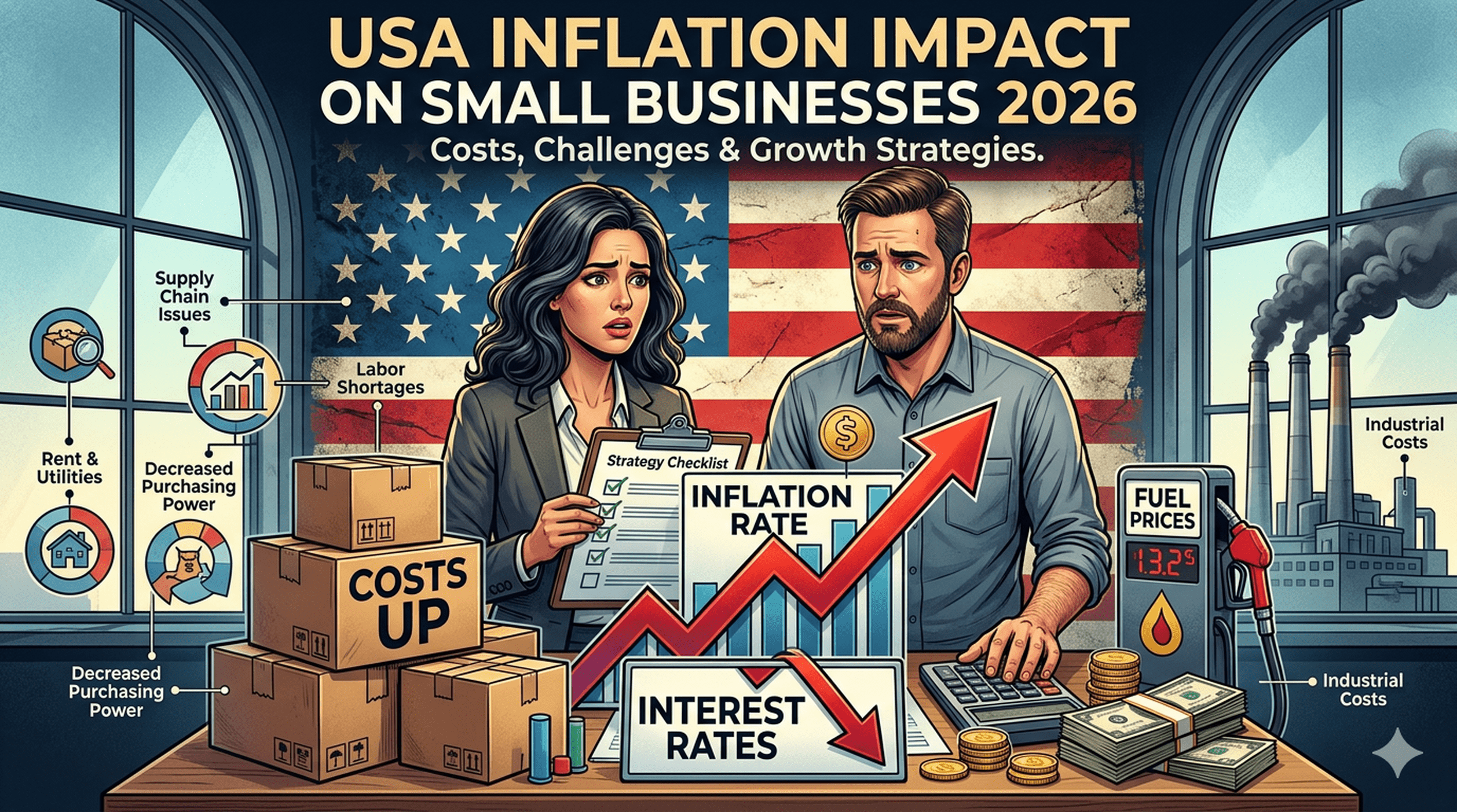
For small businesses, inflation creates multiple challenges at once. Expenses increase, financing becomes more expensive, and customers become more cautious with spending. Unlike larger corporations, small enterprises often lack the flexibility to absorb sudden cost increases without adjusting prices or cutting expenses elsewhere.
Rising Operating Costs in 2026
Increased Cost of Supplies and Materials
One of the clearest examples of the USA inflation impact on small businesses 2026 is the steady rise in operational costs. Suppliers charge more for raw materials, wholesalers adjust pricing frequently, and transportation costs remain elevated.
Small businesses that rely on imported materials or specialized goods are especially vulnerable. Because they typically purchase in smaller quantities, they do not benefit from bulk discounts that protect larger companies from rapid price swings.
Higher Energy and Utility Bills
Electricity, fuel, and heating costs have also contributed to financial strain. Service-based businesses such as restaurants, salons, and manufacturing workshops must absorb higher energy expenses while trying to maintain stable pricing for customers.
Wage Growth and Labor Market Pressure
Inflation directly affects workers, increasing their cost of living. As a result, employees seek higher wages to maintain their purchasing power. For small business owners, this creates additional payroll pressure.
Recruiting and retaining skilled employees has become more competitive. Larger firms may offer better compensation packages, leaving small businesses struggling to match those benefits. Owners often face difficult decisions: increase wages and reduce margins, or risk losing experienced staff.
Consumer Behavior Changes
Another important factor in the USA inflation impact on small businesses 2026 is changing customer behavior.
When household expenses rise, consumers adjust their spending habits. They may:
-
Cut back on non-essential purchases
-
Switch to lower-cost alternatives
-
Delay major buying decisions
-
Compare prices more carefully
This shift affects retail stores, local restaurants, entertainment venues, and service providers. Even loyal customers may reduce frequency of purchases if their budgets feel strained.
Financing and Interest Rate Challenges
In response to inflation, central banks — including the Federal Reserve — tightened monetary policy by increasing interest rates in previous years. While rate adjustments may fluctuate, borrowing remains more expensive than during low-rate periods.
For small businesses, higher interest rates mean:
Companies planning to open new locations, upgrade equipment, or invest in marketing may postpone these plans due to financing concerns.
Supply Chain Adjustments
Although supply chains have improved compared to earlier disruptions, instability has not disappeared entirely. Delays, geopolitical tensions, and transportation challenges still affect product availability and pricing.
Small businesses are often less diversified in their supplier networks. When one supplier raises prices or experiences delays, the impact can be immediate. Some companies in 2026 are working to build stronger relationships with local vendors to reduce risk exposure.
Sector-Specific Effects
Retail Businesses
Retailers face double pressure: rising wholesale costs and cautious consumer spending. Maintaining competitive pricing while protecting profit margins is becoming increasingly complex.
Hospitality and Food Service
Restaurants and cafés are particularly sensitive to food price inflation and wage increases. Menu pricing must be adjusted carefully to avoid driving customers away.
Service Providers
Service-oriented businesses such as repair shops, consulting firms, and personal care providers experience rising labor costs and fluctuating demand depending on consumer confidence.
Profitability Outlook in 2026
Despite inflationary challenges, many small businesses continue to adapt successfully. Flexibility and innovation are proving essential.
Some businesses have shifted toward digital sales channels, subscription-based models, or premium service offerings to offset cost increases. Others have focused on building stronger community ties to encourage repeat business.
While profit margins may be tighter, businesses that actively adjust strategies are better positioned for stability.
Smart Strategies for Small Businesses
Improve Cost Management
Carefully reviewing supplier contracts, monitoring waste, and renegotiating service agreements can reduce unnecessary spending.
Embrace Technology
Automation tools, inventory management systems, and digital payment solutions can streamline operations and improve efficiency.
Strengthen Customer Loyalty
Offering rewards programs, exclusive discounts, or personalized communication helps retain customers even when prices rise.
Diversify Revenue Streams
Adding complementary services or new product lines can reduce reliance on a single income source.
Maintain Strong Cash Flow Planning
Regular financial forecasting allows business owners to anticipate shortfalls and prepare for seasonal fluctuations.
Government and Community Support
In 2026, various federal and state programs continue to support small enterprises through tax credits, grants, and advisory resources. Staying informed about available assistance programs can provide meaningful financial relief.
Networking within local business communities also offers collaboration opportunities and shared problem-solving strategies.
Conclusion
The USA inflation impact on small businesses 2026 reflects a complex economic environment shaped by rising costs, evolving consumer habits, and tighter financial conditions. While the pressure is real, small businesses are demonstrating resilience through strategic adjustments and innovation.
Inflation challenges profitability, but it also encourages smarter operations, stronger customer relationships, and improved financial discipline. Businesses that remain adaptable, data-driven, and customer-focused are more likely to succeed in today’s environment.

 Business