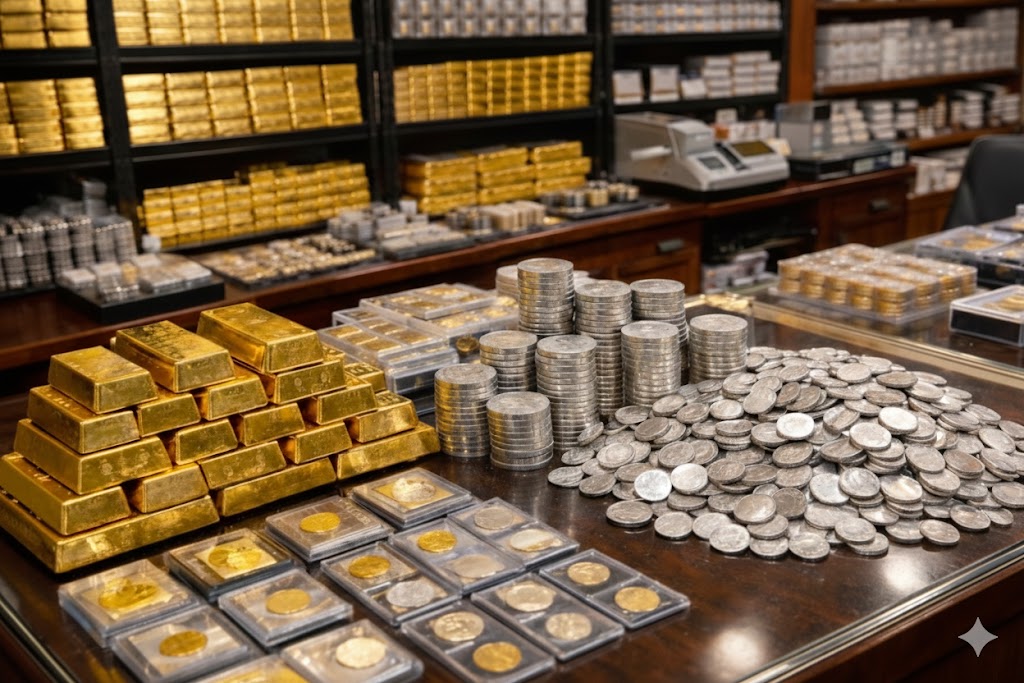
Across the United States, local coin shops and precious metal dealers are facing a strange new challenge: they’re literally running out of room for all the gold and silver being sold to them. After months of extreme price volatility, an unprecedented wave of customers has been turning in bullion, old coins, scrap silver, and gold jewelry, leaving many dealers scrambling to manage inventory and forcing some to cap how much they’ll buy from individual sellers.
Record High Prices Trigger Flood of Sellers
In late January 2026, the price of gold briefly soared above $5,300 per ounce, while silver climbed toward $120 — levels that acted like a magnet for sellers. Many ordinary holders of bullion bars, vintage coins, and heirloom jewelry saw the spikes as an opportunity to turn metal they had tucked away into cash.
This surge in selling was driven by more than just price speculation. Economic uncertainty, rising living costs, and the high cost of borrowing have encouraged individuals to cash in physical metals as a way to cover expenses like taxes, medical bills, or household budgets. This resulted in what many coin dealers describe as an overwhelming inflow of gold and silver products that far exceeded normal market levels.
Coin Shops Struggle With Inventory Surpluses
Unlike typical retail businesses that face shortages of goods, coin shops are dealing with the opposite problem: too much precious metal on hand. Local dealers — including long-established shops such as University Coin & Jewelry and Rick’s Olde Gold in Madison, Wisconsin — are reporting significant stockpiles that they cannot easily move.
A key reason is that these dealers don’t usually keep gold and silver indefinitely. Most of what they buy from customers is traditionally sent to wholesale refiners, where it is melted down and re-minted into standard bullion bars and coins. But right now, refining facilities are overwhelmed, creating a bottleneck in the supply chain.
Refinery Backlogs Disrupt the Precious Metal Chain
Precious metal refineries — the businesses that purify and recast raw metal into sellable bars — have received far more material than they can process. Some facilities have even temporarily stopped accepting new silver or imposed limits, due to the sheer volume of incoming metal and capacity constraints. That means local dealers don’t have reliable outlets to sell off excess inventory, tying up their cash in products they can’t quickly convert back into money.
This disruption has reverberated through the market. Normally, retailers can resell bullion to refineries within days, maintaining sufficient cash flow to keep buying more from sellers. But with refineries backed up or pausing purchases altogether, that link has weakened — leaving shops stuck with metal and declining liquidity.
Limits on Purchases Become the New Norm
To cope with this unusual situation, many coin shops have started implementing purchase limits, restricting how much gold and silver they will buy from a single customer in one day. This strategy helps them manage cash flow and continue serving a broader customer base rather than depleting all available money on a few large transactions.
Shop owners say the limits also ensure they can continue to provide immediate payouts — often preferred by sellers who need quick cash for urgent needs. Without these controls, dealers risk running out of capital and facing operational challenges or insolvency.
Volatility Makes Risk Management Difficult
Another major factor behind the shift in dealer behavior is price volatility. After huge ups and downs in gold and silver prices, dealers face serious risk if they hold large inventories without a clear idea of where prices may go next. One coin shop manager explained that buying too much metal during such swings can quickly drain working capital, especially when they cannot hedge prices or lock in refinery payouts promptly.
For coin shops that rely on predictable turnover, this environment is far from normal. Refineries that delay payments or temporarily reject certain types of metal — particularly hybrid alloys or smaller pieces — add another layer of uncertainty. Shops feel pressured to stay conservative until the market stabilizes.
Long-Term Prices Still Strong
Despite these short-term headaches, many dealers and market watchers point out that both gold and silver remain well above year-ago price levels. Although prices have retraced from their January peaks, precious metals are still trading significantly higher than in early 2025 — meaning those who held bullion saw strong long-term gains.
For example, silver’s price climbed by over 140% year-over-year before the correction, and gold saw near-80% growth in the same period, illustrating why holders chose this moment to sell.
What Comes Next for Coin Dealers
Looking ahead, the situation for local coin shops will hinge on refinery capacity and market stability. If refiners can process the backlog and resume buying, dealers may find it easier to offload excess metal and resume normal purchase patterns. Conversely, continued bottlenecks or renewed price spikes could prolong buying limits and cautious dealer strategies.
In the meantime, sellers and buyers alike should be aware that the physical metal market is operating under unusual conditions. Coin shops are adapting rapidly, balancing customer needs with operational realities in an environment shaped by volatile prices and logistical constraints.

 Business